Having a decent, affordable home is fundamental to a good life. It affects our health, our wellbeing, and our ability to thrive. Over the past few days and weeks, there has been a lot in the news that touches on housing, and on immigration more broadly.
Like many people, I have my own views on immigration. It is an issue that often prompts strong opinions, and it is completely understandable why. But in this update, I am not going to go into the wider debate about the rights and wrongs, or what people see as the benefits and drawbacks. Instead, I want to focus on one specific area where there is a lot of misunderstanding. That is the relationship between migration and housing, and in particular social housing.
Before I get into that, it would feel wrong not to acknowledge some of the recent events we have seen reported. The murder of Henry Nowak, and the attempted murder in Belfast earlier this week, are both shocking and deeply upsetting. For me it brings back memories of the sort of intolerance I grew up with in Northern Ireland in the 1970s and 80s, and which still persists today. Our thoughts should be with the people directly affected and their families.
At times like this, emotions understandably run high. And when that happens, it becomes even more important to separate fact from assumption.
Over the past week I have seen a number of claims about migrants and housing. One example that was picked up by Radio 4’s More or Less programme was recent news coverage suggesting that large proportions of all the new homes being built would go to migrants. That kind of argument is striking. It is also a good example of how easy it is for complex issues to be simplified and communicated in a way that can be very, very misleading.
It’s important to understand is how the system actually works:
- First, social housing is not allocated based on nationality or immigration status. Allocations are based on need. Things like homelessness, overcrowding, medical conditions and vulnerability are what determine priority.
- Second, the idea that migrants or asylum seekers are being prioritised for social housing is simply not supported by the evidence. In England, only about one in ten new social housing lettings go to non‑UK nationals. In Cornwall, 99% of social housing lettings go to someone with a local connection.
- Third, asylum seekers are not eligible for social housing at all. They are housed separately through Home Office arrangements while their claims are processed.
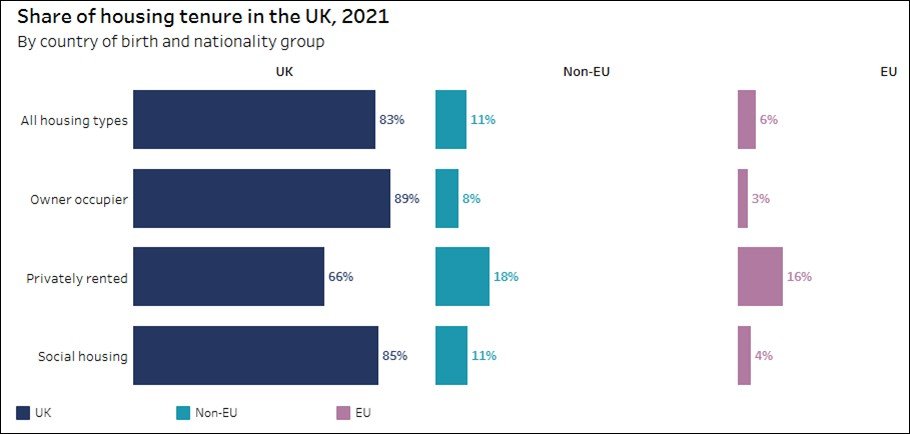
The results of this are that migrants are actually more likely to be in the private rented sector than in social housing, particularly in their early years in the UK. And if you look at the make-up of social housing overall, it broadly reflects the wider population. In other words, migrants are not over‑represented within the system (if anything, they are slightly underrepresented).
It is also worth saying something about how the system works in practice. Most social housing lettings are not brand new homes. They are relets of existing properties. And with demand far outstripping supply, decisions about who is housed are difficult and often involve people in genuinely challenging situations. We see that every day in our work. Behind every application is a story. Often a complex one.
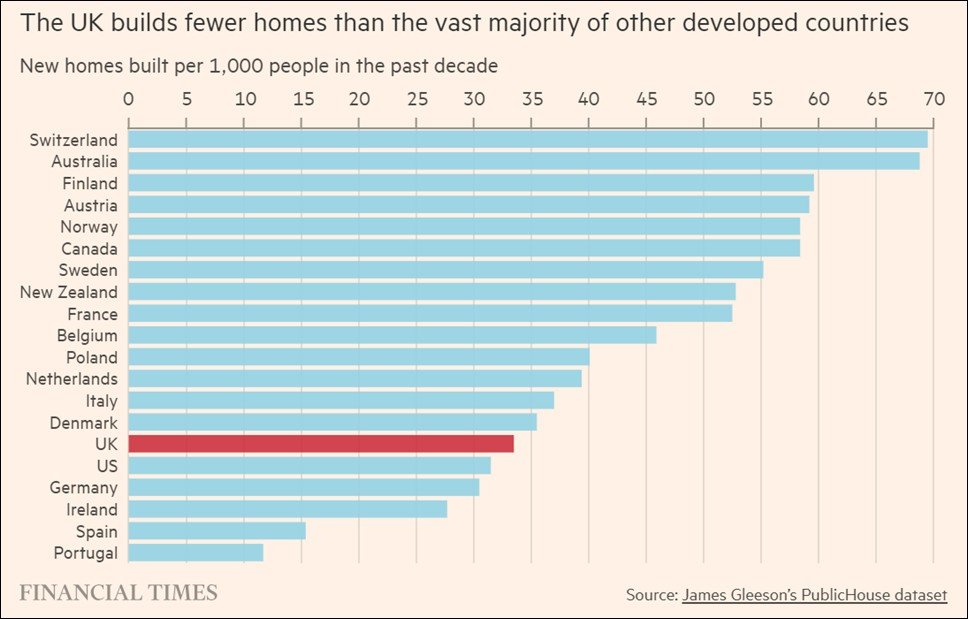
None of this is to dismiss the fact that housing is under huge pressure. It is. We all feel that. But the evidence is very clear that the primary issue is a lack of supply over many years, not who is being prioritised within the system.
I appreciate that this won’t change everyone’s views. And that is not the intention. But I do think it is important that, as an organisation that works at the heart of this issue, we base our understanding on evidence, not on assumptions, or on headlines and stories that often seem to wilfully and cynically misrepresent the truth.
And just as importantly, we think about how we talk about these issues. Because whatever our views on immigration, the people we are talking about are individuals and families, just like the rest of us.
So my ask this week is a simple one. Let’s approach these conversations with kindness, compassion and understanding.