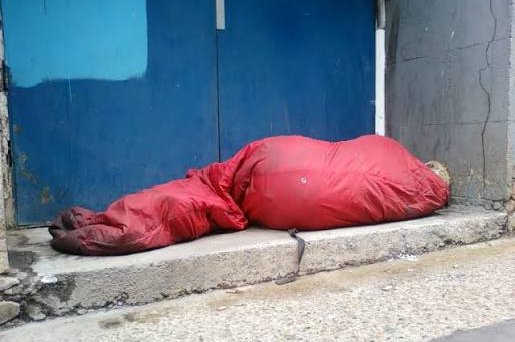
Saturday was World Homeless Day, and it came at an interesting time this year.
Our new Prime Minister, Andy Burnham, has promised to offer everyone sleeping rough in England a route off the streets by Christmas. There’s £442 million behind the programme, and the Government has since gone further, saying that the Covid-style “Everyone In” approach will become a permanent national policy. I think that’s brilliant. Nobody should be sleeping on the streets, and I really hope the Government succeeds.
But there are a couple of things I think are worth bearing in mind when we talk about ending homelessness.
The first is that we’re not all equally at risk of becoming homeless. You sometimes hear people say that any of us could become homeless, or that we’re all only a couple of pay packets away from it. It sounds compassionate, because it stops us thinking about people who are homeless as somehow different from the rest of us.
But there’s some really interesting research which basically says: don’t believe the hype. Poverty, particularly childhood poverty, is by far the strongest predictor of homelessness in young adulthood. Having family and friends around you provides a safety net, and where you live makes a difference too. Some people face a much, much higher risk of homelessness than others.
I can make that personal. I’m a white man who grew up in a stable middle-class family. I’ve been lucky. I’ve always had people and resources around me to cushion things when something went wrong. The idea that throughout my life I’ve faced the same risk of homelessness as someone growing up in poverty, without those safety nets, just isn’t credible.
That matters. Because if homelessness isn’t random, we can understand the things that make it more likely. And if we can understand them, we can do something about them.
The second thing is that rough sleeping and homelessness aren’t the same thing. When we hear “homeless”, a lot of people probably picture someone sleeping in a doorway or on the street. That’s understandable, because it’s the homelessness we actually see. But it’s really just the tip of the iceberg.
The official estimate found 4,667 people sleeping rough in England on one night in November 2024. But the homelessness charity Crisis estimates in its Homelessness Monitor that around 300,000 households were experiencing homelessness in 2024. That includes rough sleeping, but also people sofa surfing, living in hostels and shelters, and living in unsuitable temporary accommodation.
So getting everyone off the streets by Christmas would be a fantastic achievement. But there’s a really important and perhaps surprising thing that could be missed. In the UK we’re actually quite good at tackling rough sleeping, but we’re pretty much the worst in the developed world at tackling homelessness overall.
To help give this context, there’s a useful definition of ending rough sleeping which says it should be rare, brief and non-recurring. In other words, fewer people end up on the streets; when they do, they get help quickly; and they don’t end up back there again. England has previously been pretty good at this. In 2021 only Japan and South Korea had lower rates of rough sleeping among countries where comparable data was available.
But look at homelessness more widely and the picture is almost exactly the opposite. The chart below is one of the most surprising and shocking charts I've seen. It shows that Britain is very much at the wrong end of the table, with by far the highest overall rate among the developed countries it compares.
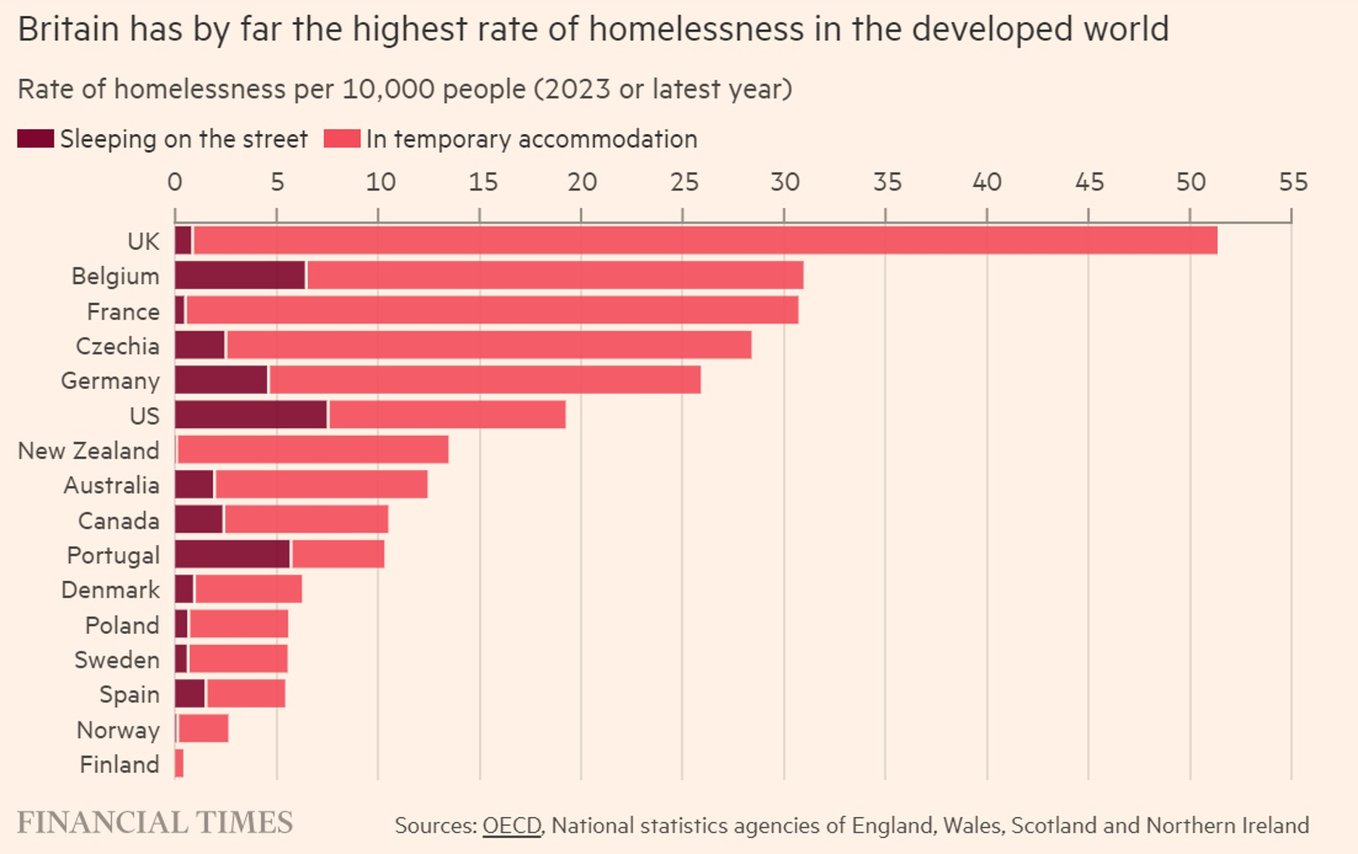
So perhaps the lesson is that getting people off the streets and ending homelessness aren’t quite the same challenge. We should absolutely do the first. But if we want to do the second, we have to tackle the much bigger problem underneath it.
The good news is that we have a pretty good idea what would help. We need more social housing, to prevent people from becoming homeless in the first place, to provide Housing First for people who need more support, and to have a benefits system that does more to prevent severe poverty. Crisis's research shows that doing these things together could substantially reduce homelessness.
A lot of that probably sounds familiar, because it’s very close to home here at Coastline. We build genuinely affordable homes. We help people keep the homes they already have. Through our homelessness and supported housing services we work with people who need more than just a roof over their head. And we work with partners across Cornwall to try to prevent homelessness in the first place.
So, I really hope we get everyone in for Christmas. But Christmas has to be the start, not the finish. Because ending homelessness isn’t just about helping someone once they’re sleeping in a doorway. It’s about having enough decent, secure, affordable homes. It’s about stepping in earlier when somebody is struggling. And it’s about giving more people the safety nets they need so that, when something goes wrong, losing their home isn’t the consequence.
Homelessness isn’t inevitable. We know what can make a difference. We just have to choose to do it.