Better for your wallet
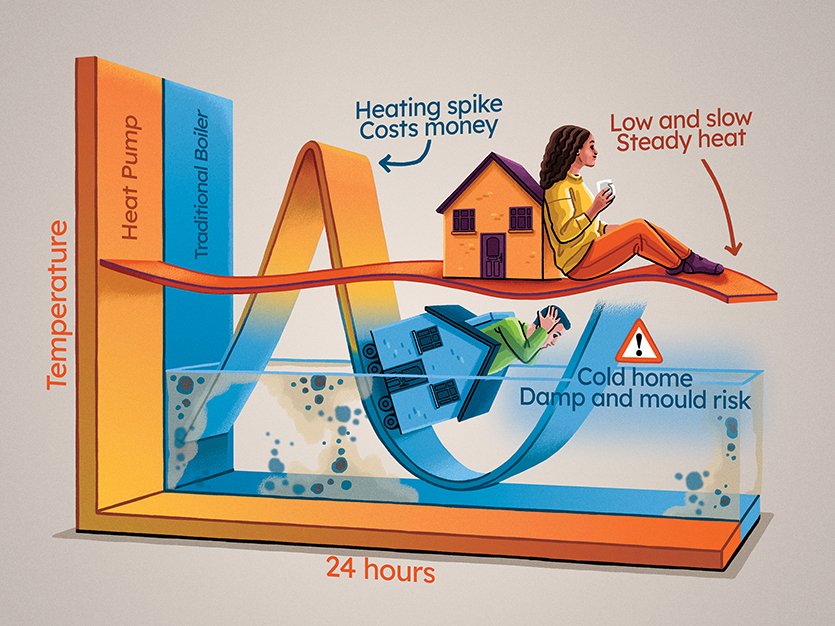
It’s hard to get a heavy object moving, yet easier to keep it going once it’s already moving. In the same way, it’s easier to keep a home at a steady warm temperature, than it is to let it get cold and try and heat it up again.
This means a heat pump is most efficient, and therefore cheapest to run, when it’s left on: low and slow.
Maintaining a steady and comfortable temperature can also prevent the build up of damp, and a dry home is easier – and therefore cheaper – to heat than a damp home: it’s three times more expensive to heat damp air compared to dry air.
Better for your health
A cold home is a damp home, and damp leads to the growth of mould – which can have serious impacts on your health.
Keeping the temperature of your home above 16°C can help your home stay out of the damp zone, and stop the build up of mould.
Regular ventilation, by opening windows for short periods, can also help to reduce damp and mould. With the low and slow heating method, 90% of the heat in your home is stored in its walls and furniture. So when it’s time to let some fresh air in, much of the heat will stay in the building.
Better for your environment
Unlike oil and gas boilers, heat pumps do not burn fossil fuels. Instead they use electricity which is increasingly generated from renewable sources, like wind and solar.
By not burning fuel directly, heat pumps also improve air quality in your home.
In the near future, all houses are likely to use heat pumps – as part of the UK’s drive to substantially reduce greenhouse gas emissions by 2050. Your home is already ahead of the game.